

- 0 commentson Sew a hobo bag: a five-step guide
- by Marit Warncke
Sew a hobo bag: a five-step guide
- 0 commentson Sew a hobo bag: a five-step guide
- by Marit Warncke
Sew a relaxed hobo bag in five clear steps. This free guide covers materials, cutting, lining and turning; the matching PDF pattern is available separately in the shop.
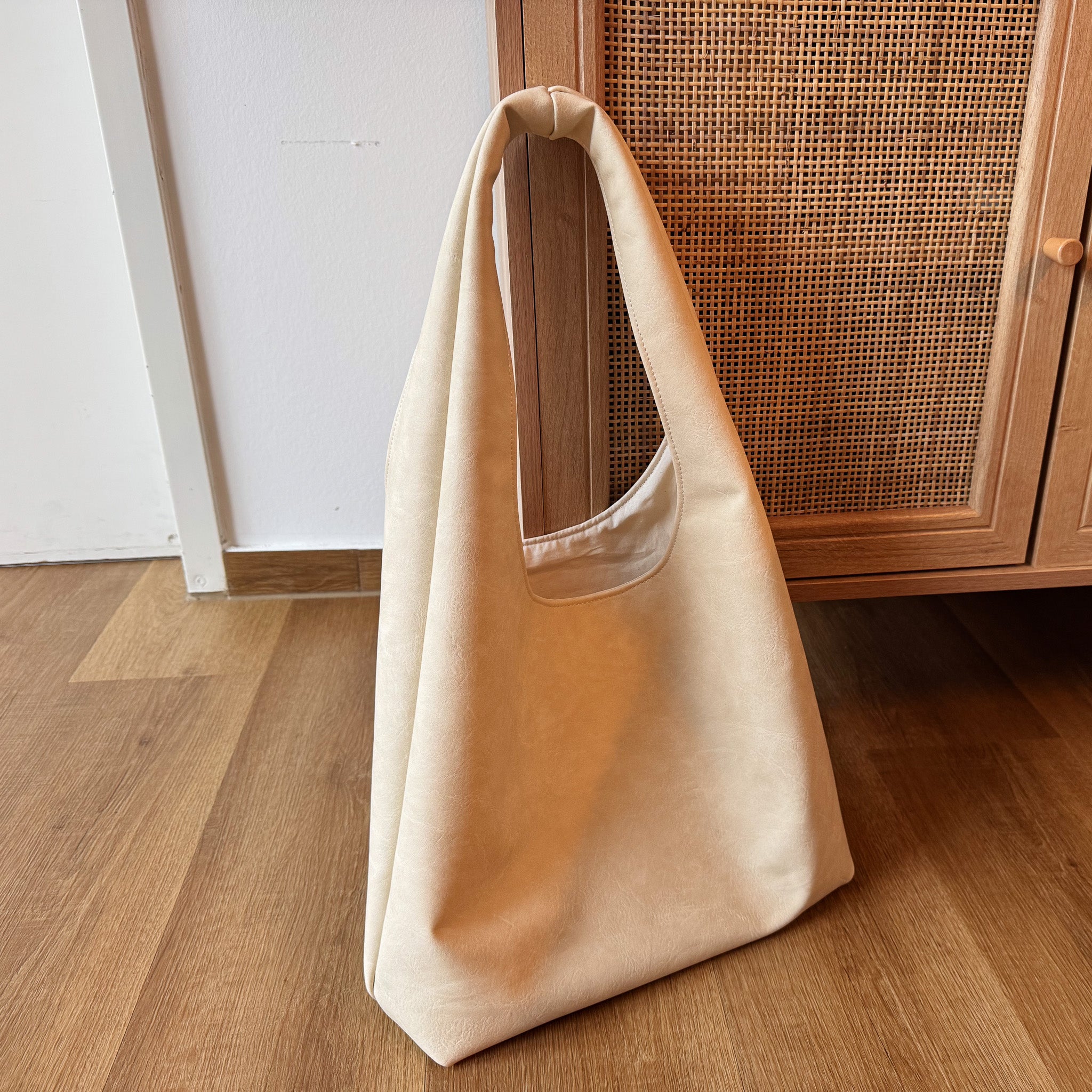
You can sew a hobo bag from two outer and two lining pieces in five steps: cut, close the sides, shape the base corners, attach the lining and turn. The instructions in this article are free. The accurately sized PDF pattern is a separate product in our shop.
A hobo bag is a soft shoulder bag with a curved, often crescent-shaped silhouette. Its relaxed drape comes from the pattern and an outer fabric that is not too rigid. Unlike a structured handbag, it is meant to settle naturally against the body.

Clips are often better than pins for faux leather. Test the marker, needle, stitch length and presser foot on a scrap. A slightly longer stitch helps avoid unnecessary perforation, although the correct setting still depends on the material and machine.

Print the PDF at its specified original scale without fit-to-page and check the test square. Assemble the pages. Transfer the pattern and specified seam allowance to the outer and lining fabrics, then cut two mirrored pieces from each.

Place the outer pieces right sides together and sew the sides and bottom. Repeat for the lining, leaving a generous turning gap along its bottom edge. Backstitch at the beginning and end, and avoid stretching the edges.

At each lower corner, align the side seam exactly with the bottom seam. Sew across the marked corner. Repeat on the outer bag and lining so both have the same depth. Check the fit before trimming any seam allowance.
Place the outer bag inside the lining with right sides facing. Match the side seams and upper edge, then sew evenly around the curve. Trim or clip seam allowances only where the material and curve require it.
Carefully turn the bag through the gap in the lining. Shape the edges without sharp tools, close the gap by machine or hand, and join the straps as described in the pattern. Finally, inspect every load-bearing seam.

You can use the complete five-step tutorial here at no cost. The separately available hobo bag PDF pattern gives you ready-made pattern pieces and a more detailed illustrated guide. You can use leftover fabric for a small pouch or a visible clothing repair.
AI embroidery designs look great – but as embroidery files, they're often completely useless
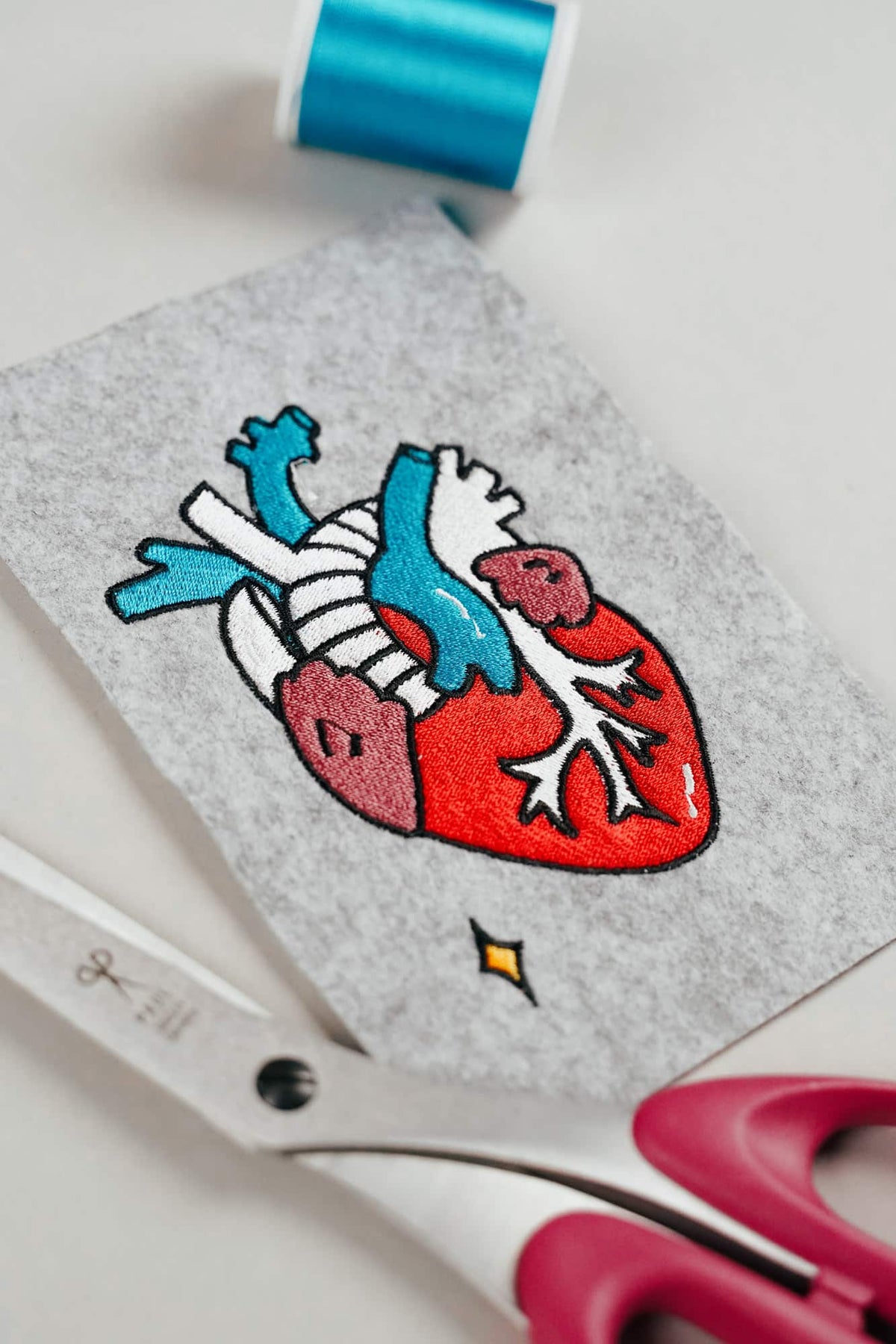
AI images often look like perfect embroidery, but are frequently unsuitable as a template for a real embroidery file. We'll show you which mistakes to avoid with AI-generated motifs, how to formulate better prompts, and how to recognise well-digitised embroidery files.
Embroider a woodland mobile: ITH ornaments step by step
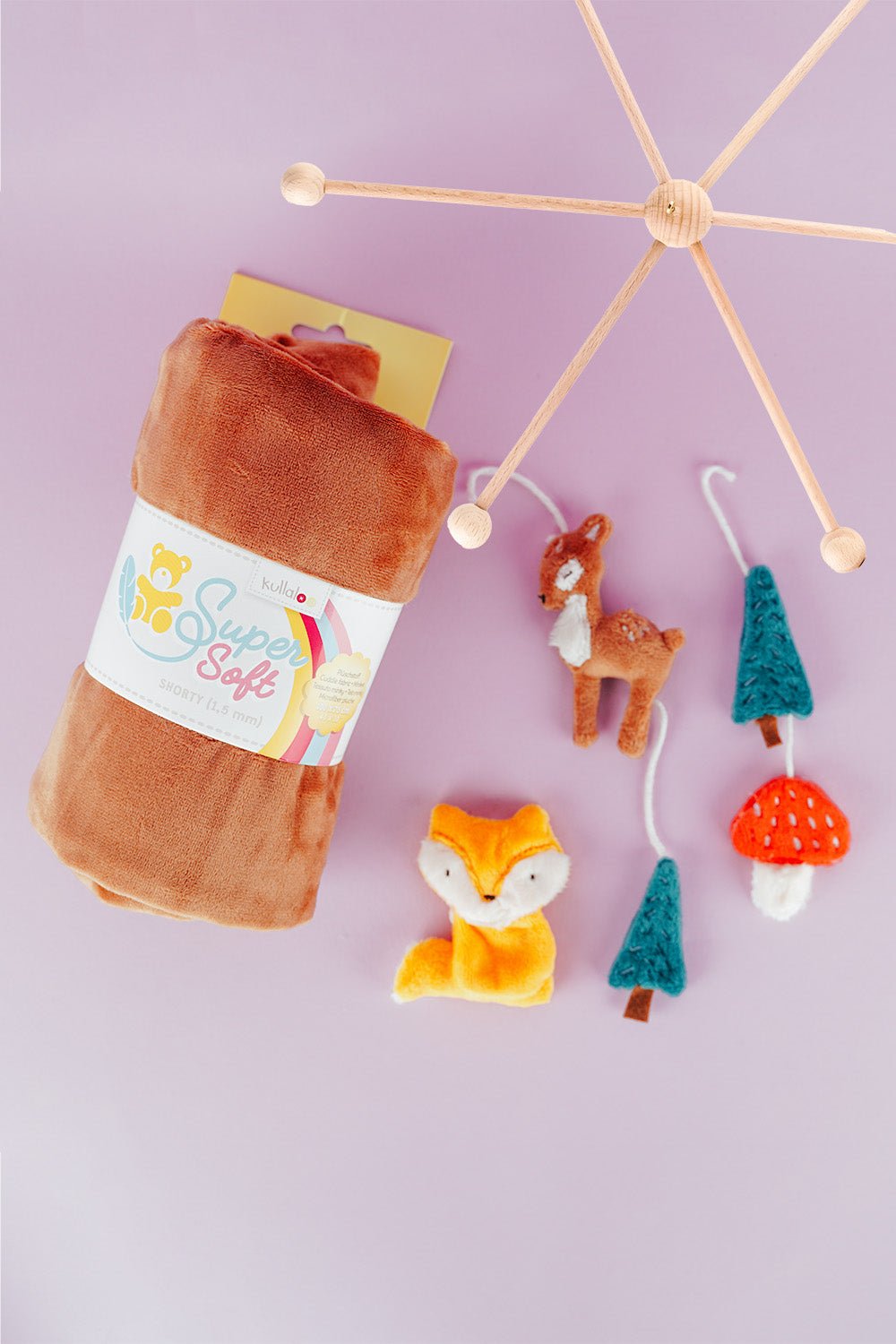
Embroider fox, deer, fir tree and mushroom in a 10 × 10 cm hoop, then turn them into a woodland mobile or garland.
Read moreabout Embroider a woodland mobile: ITH ornaments step by step
Sew an alphabet cushion: personal pillows from A to Z
Sew an alphabet cushion with neat curves, even filling and a hidden ladder stitch, using a digital pattern that includes every letter from A to Z.
Read moreabout Sew an alphabet cushion: personal pillows from A to Z

Split:
Position embroidery patterns perfectly
Embroidery Machine Accessories: What You Really Need