

- 5 commentson Embroider Velcro Patches: Removable Backing Step by Step
- by Mark Angilowski
Embroider Velcro Patches: Removable Backing Step by Step
- 5 commentson Embroider Velcro Patches: Removable Backing Step by Step
- by Mark Angilowski
Velcro patches can be swapped and reused. Learn how to embroider the patch with hook backing and attach the loop side to the carrier.
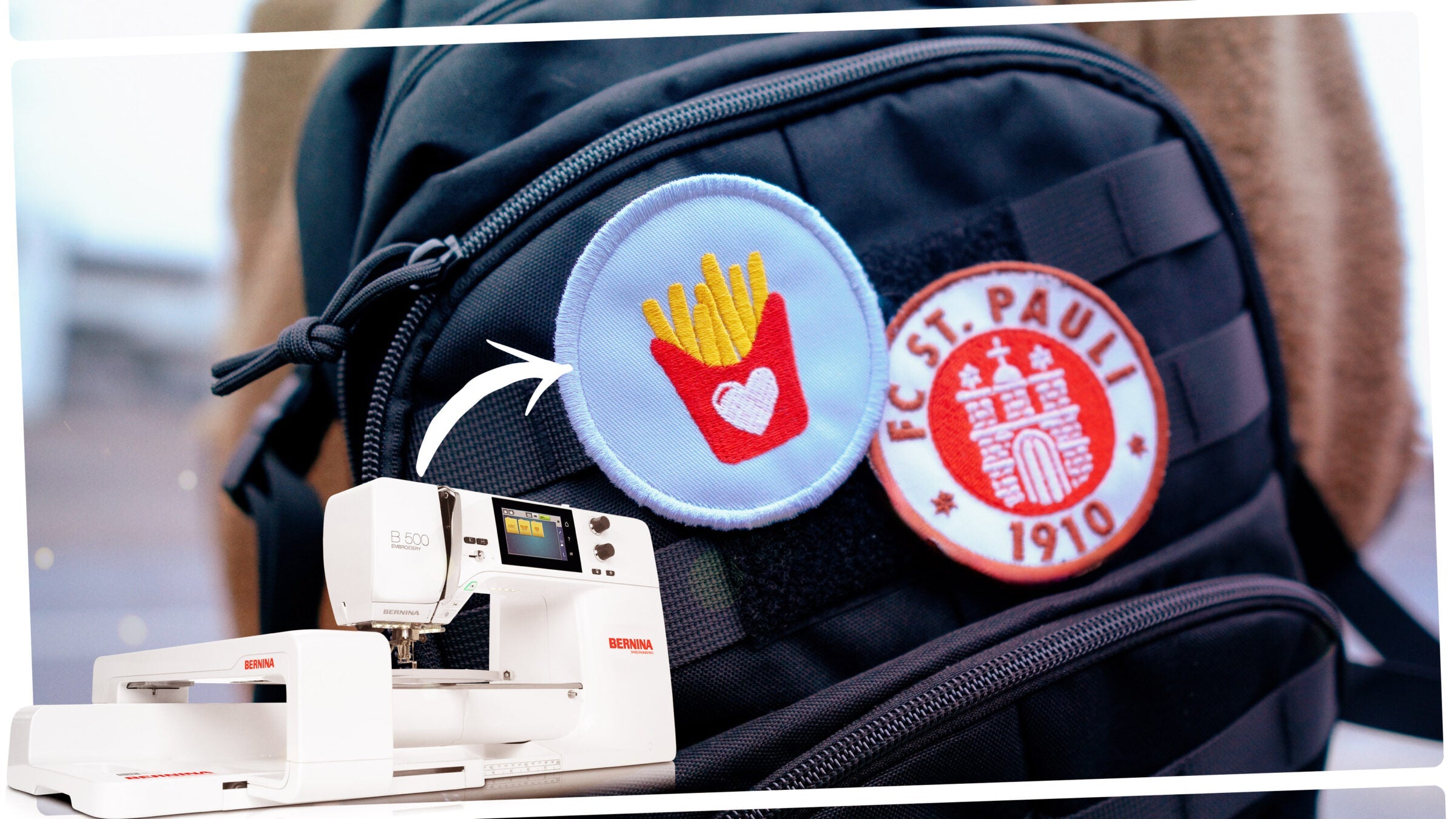
Velcro patches are the right choice when a motif needs to remain interchangeable. The patch is embroidered with the hook side on its back, while the matching loop side is attached to the garment, backpack or carrier. This guide deliberately focuses on that removable construction.
For a classic sew-on or iron-on badge, start with our patch basics guide. For a freestanding finish on water-soluble film, use the separate Ultra Solvy guide.
Make sure the hook and loop parts match and that the attachment to the carrier can withstand its material and intended use.
Embroidering patches was one of our very first projects with the embroidery machine. Back then, it was quite classic: embroider the design onto felt, cut it out, and you're done. Charming, creative – but from today's perspective, just the beginning.
Over the years, we have consistently developed, tested, discarded, and optimized our patch technique. Today, we have reached a point where our hand-embroidered patches have a clean, closed satin edge and are visually indistinguishable from professionally manufactured industrial patches.
And now comes the next step.

Klätsches are embroidered patches with an integrated hook-and-loop backing. They can be easily attached, replaced, and removed – without sewing, ironing, or compromises.
The best part: This technique works with any embroidery machine . It's based on our accumulated know-how from many years of machine embroidery – and yet it's perfectly suitable for everyday use.
Patches are more than just decoration. They represent attitude, humor, and a statement.
What used to be a tedious process – sewing on or permanently attaching patches – becomes surprisingly easy with a hook-and-loop backing. These hook-and-loop fasteners make patches flexible: today on your backpack, tomorrow on your jacket, the day after on your schoolbag.
This is ideal, especially for children. Designs can be changed at any time, clothing remains undamaged, and the creative possibilities grow with every new idea. But Velcro patches are also a real highlight for adults, outdoor enthusiasts, or individualists.

For some designs, a visible felt edge is still exactly right. We love this look – and continue to use it deliberately.
In parallel, we have developed a technique that gives patches a clearly defined, continuous satin border. Precise. Durable. High-quality.
This technique forms the basis for our Klätsches.
Note: We've perfected the technique presented here using all the knowledge we've gained over the past few years. This type of DIY hook and loop patch works with any embroidery machine!
I never would have thought that the little stickers would bring so much joy – and work so perfectly. I embroidered the cute designs with my Brother 880E for my daughter's school cone and then simply transferred them to the Ergobag. No sewing, no stress, everything stays on perfectly. My daughter was absolutely thrilled – and to be honest, so was I.

The requirements are deliberately kept low:
You can find all the necessary materials together in our shop as a set .
Our preferred technique ensures a professional edge and a stable shape:
Simple – and that's precisely why it's so ingenious.


Velcro patches open up completely new possibilities:
And last but not least: the embroidery itself is incredibly fun. The technique is clear, reproducible, and not time-consuming. A project that perfectly combines creativity and precision.
In our livestream, we show you the complete Klätsches technique step by step in moving images.
You'll see the entire process, get practical tips – and of course, as always, we'll talk about new developments in the embroidery world and have creative fun together.
Do you want to create your own designs as Velcro patches? No problem.
In the livestream, we'll explain how to work with two basic embroidery files that you insert before and after your design. The embellishable area is round and has a diameter of approximately 6.5 cm .
We provide the basic embroidery files, including detailed instructions, as a free download.
All materials, embroidery files and accessories from this post can be found in our shop.
Select the right product directly or use the search to discover more options and inspiration.
Klätsches are not a trend. They are a new way of thinking about patches.
Flexible. High-quality. Homemade.
AI embroidery designs look great – but as embroidery files, they're often completely useless
AI images often look like perfect embroidery, but are frequently unsuitable as a template for a real embroidery file. We'll show you which mistakes to avoid with AI-generated motifs, how to formulate better prompts, and how to recognise well-digitised embroidery files.
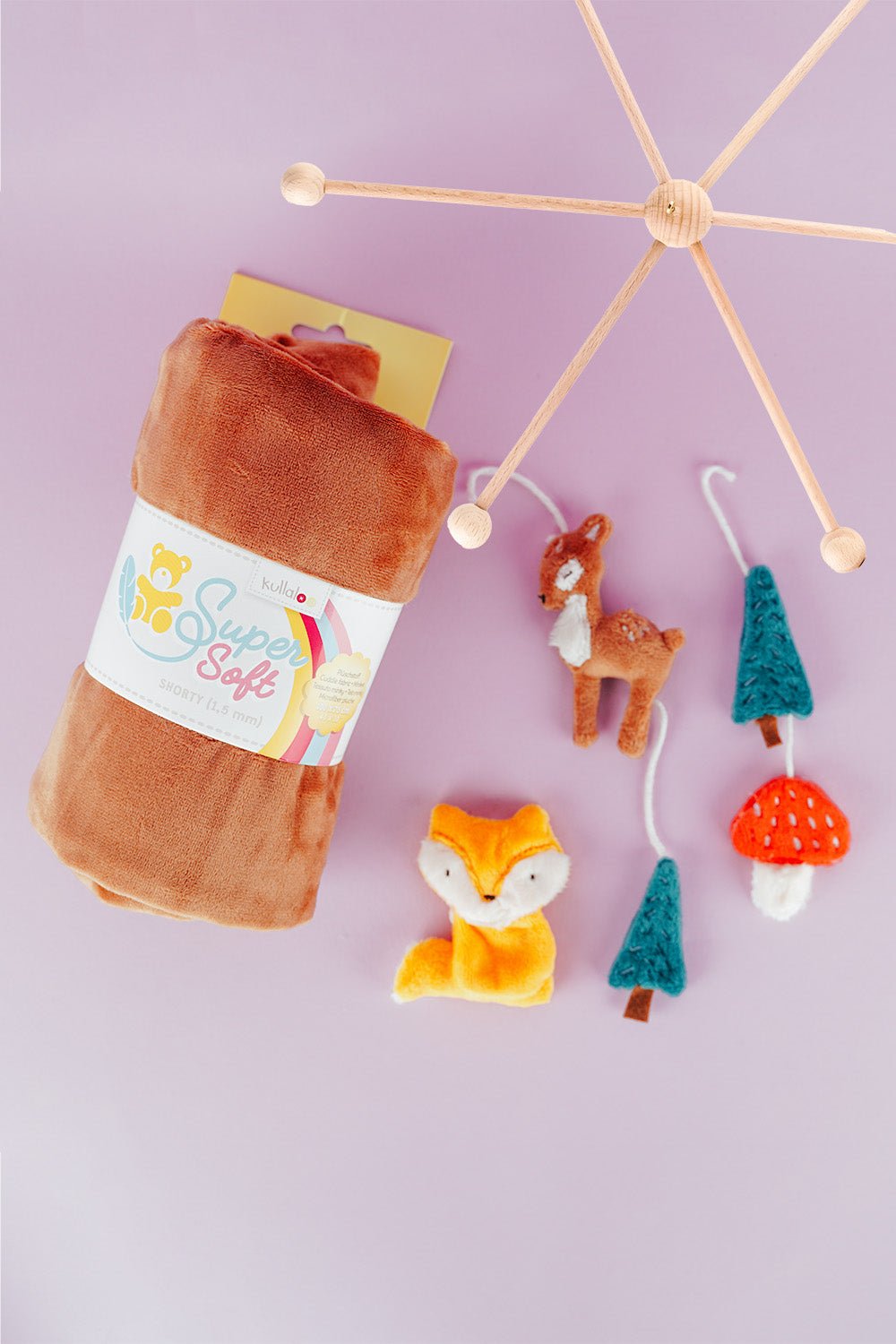
Embroider a woodland mobile: ITH ornaments step by step
Embroider fox, deer, fir tree and mushroom in a 10 × 10 cm hoop, then turn them into a woodland mobile or garland.
Read moreabout Embroider a woodland mobile: ITH ornaments step by step
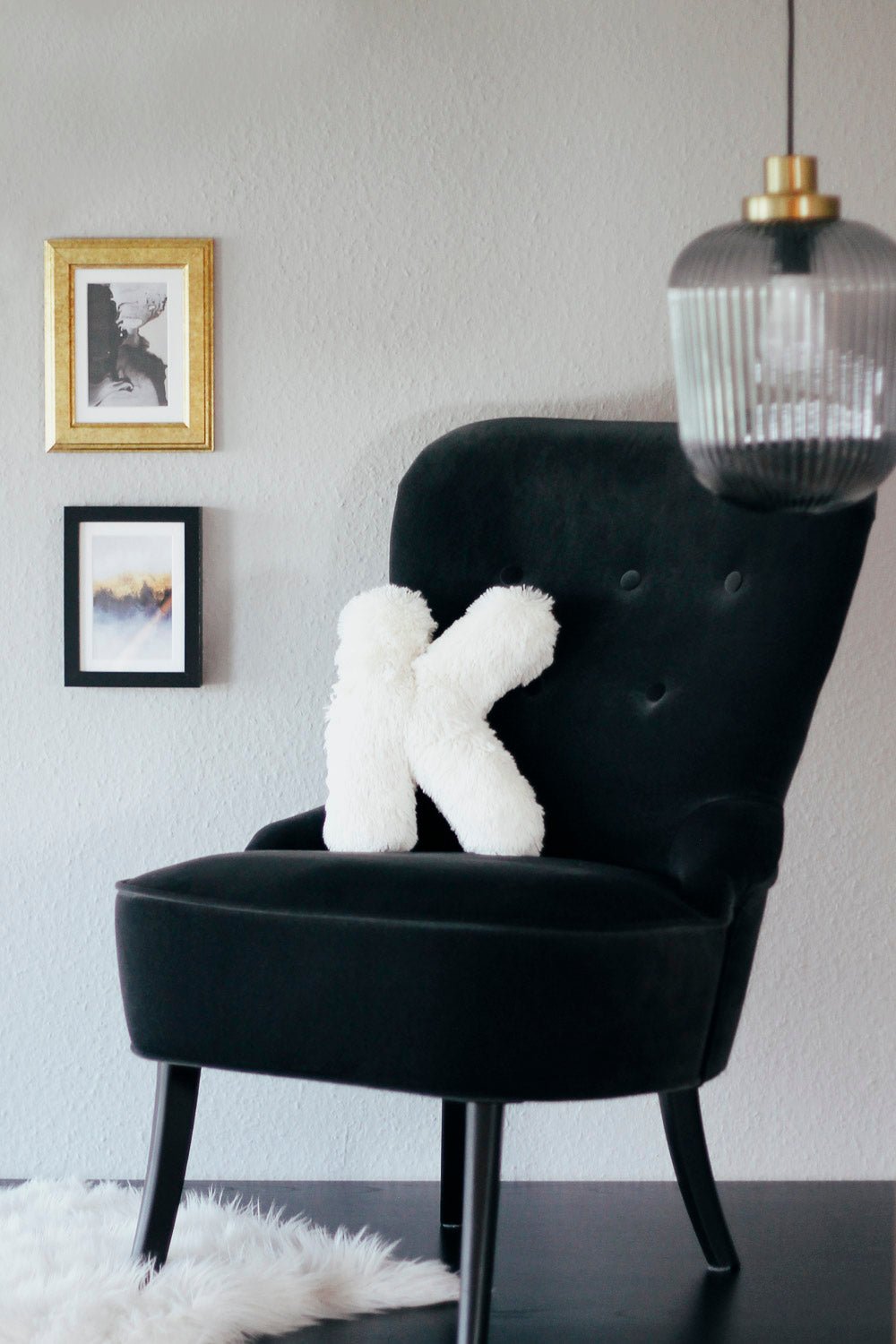
Sew an alphabet cushion: personal pillows from A to Z
Sew an alphabet cushion with neat curves, even filling and a hidden ladder stitch, using a digital pattern that includes every letter from A to Z.
Read moreabout Sew an alphabet cushion: personal pillows from A to Z


Split:
ITH pig embroidery – 3D embroidery technique with the Brother 880E
Brother Innov-is F580 review: sewing and embroidery tested
5 comments
Super Erklärung,
ein großes Dankeschön ❗
Leider führt der Link zu den Basis Stickdateien ins Leere.
Button ist durchgestrichen.
Ist das Angebot nicht mehr aktuell!
Gruß Andreas
Hallo Ihr Zwei Lieben,
ich wollte mit die Datei runterladen, aber leider funktioniert das nicht. Ich lebe in Paraguay und habe 4 Stunden Zeitverschiebung. Deswegen kann ich die Videos meistens nicht live sehen. Danke schon mal für eure Antwort.
Herzliche Grüsse aus der Ferne
Anke
Die Klätsches sind eine tolle Idee, nur leider funktioniert der Download nicht.
Leider kann ich die Basis Stickdatei nicht herunter laden. Die Website wird nicht gefunden.