


A clear choice for your project
Which embroidery stabilizer suits your project?
Answer a few questions about your application and fabric. You’ll get one clear recommendation, suitable alternatives and an additional topper when needed.
Step 1 of 4
The right stabilizer
The right embroidery stabilizer stabilizes your fabric during embroidery and helps prevent puckering, distortion, and sunken stitches. Answer a few questions and receive a specific recommendation, suitable alternatives, and – if necessary – the right topping.
Free · no registration · with product selection and PDF overview
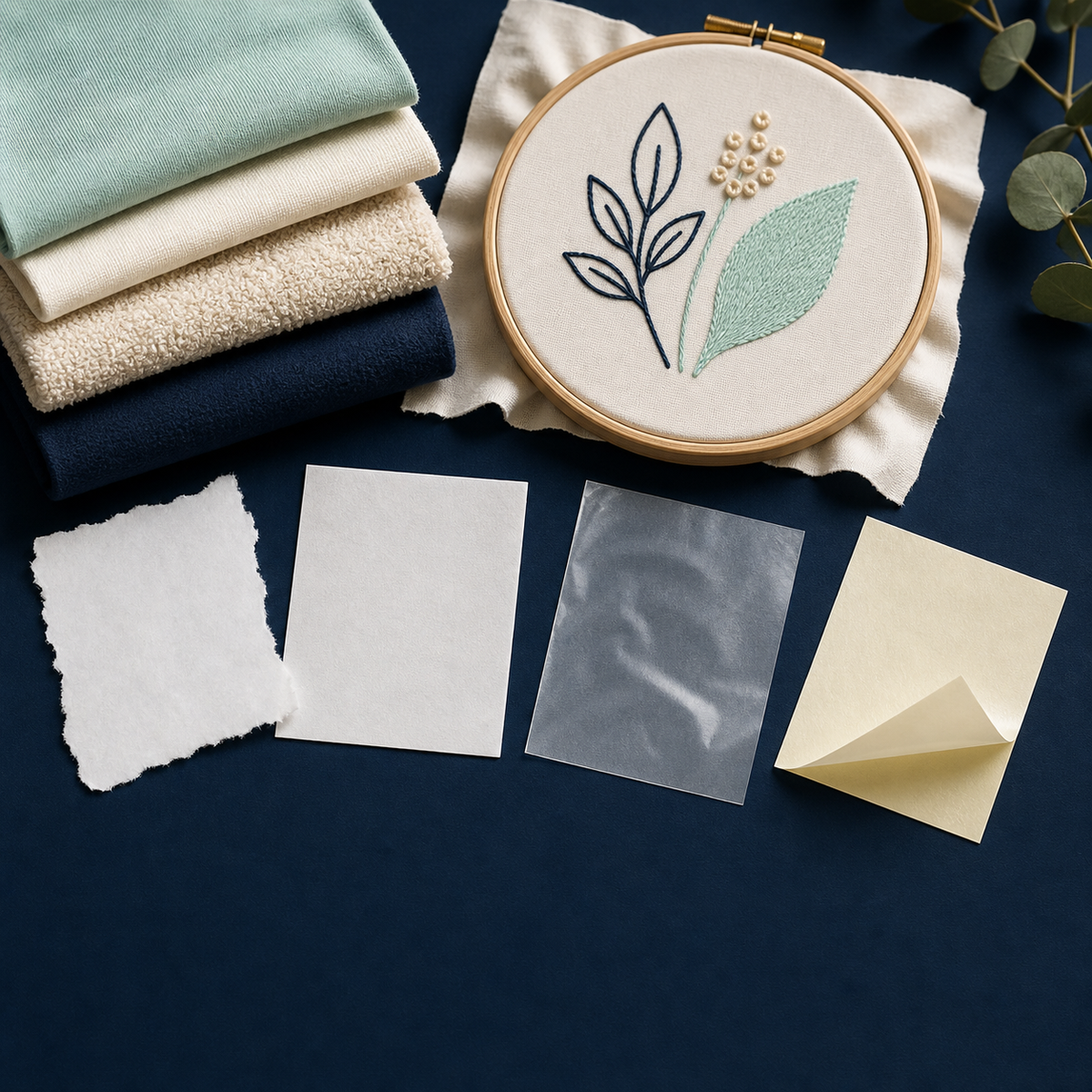
The main types of embroidery stabilizer
The most important question is not primarily about the brand or weight, but rather: What do you want to embroider and how does the fabric behave? Stretchy materials usually require a permanently stabilizing backing. Dimensionally stable fabrics often work with a tear-away stabilizer that is removed after embroidery.
For terry cloth, fleece, and other high-pile surfaces, a water-soluble topping complements the backing. Design size, stitch density, needle, thread tension, and hooping also influence the result. Use this overview as a starting point and test each new combination on a scrap piece of fabric.
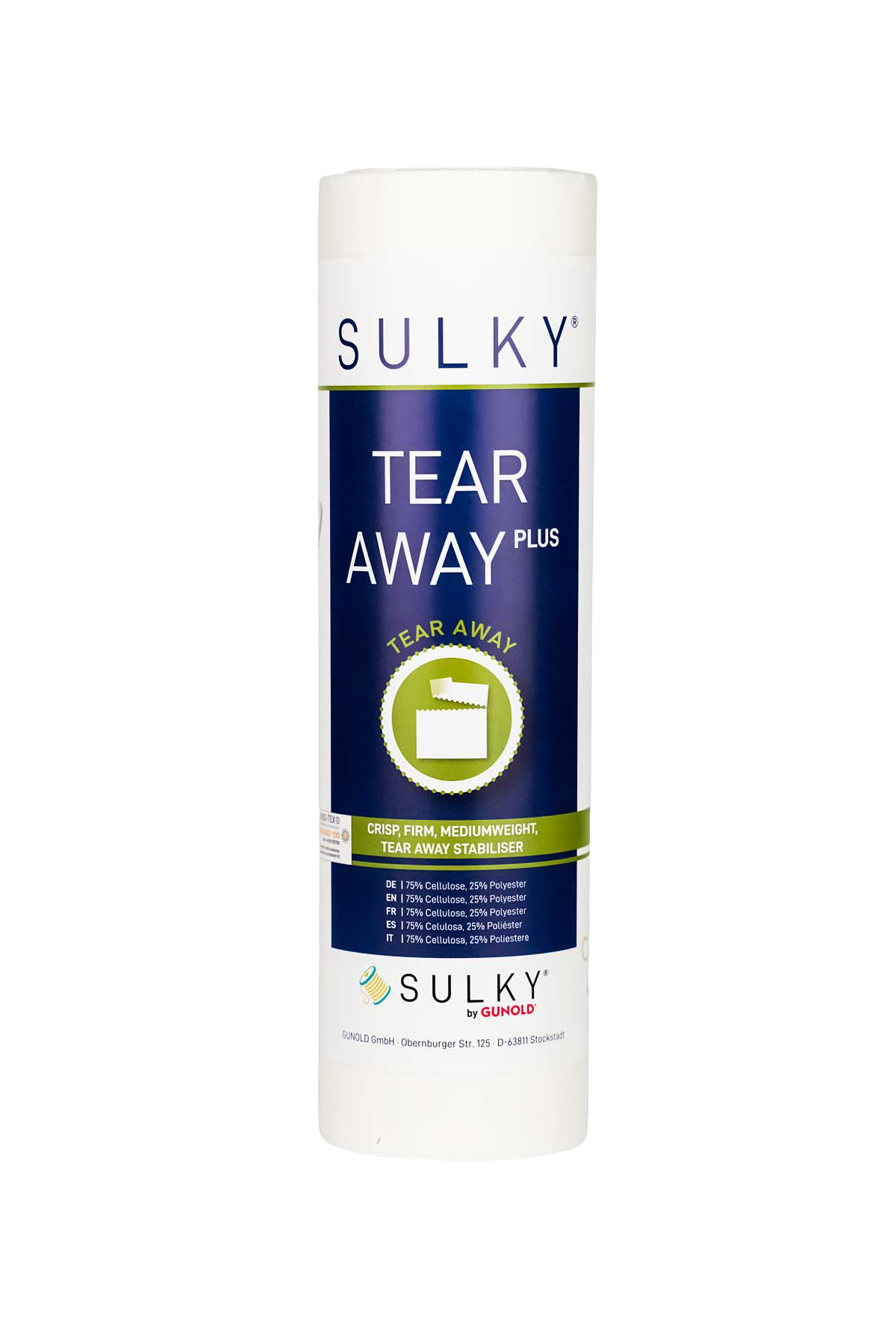
Tear-away stabilizer for stable fabrics
Tear-away stabilizer is carefully removed towards the edge of the design after embroidery. It is often a good starting point for firm cotton, canvas, and other non-stretch woven fabrics. Large or dense designs may require more stability.
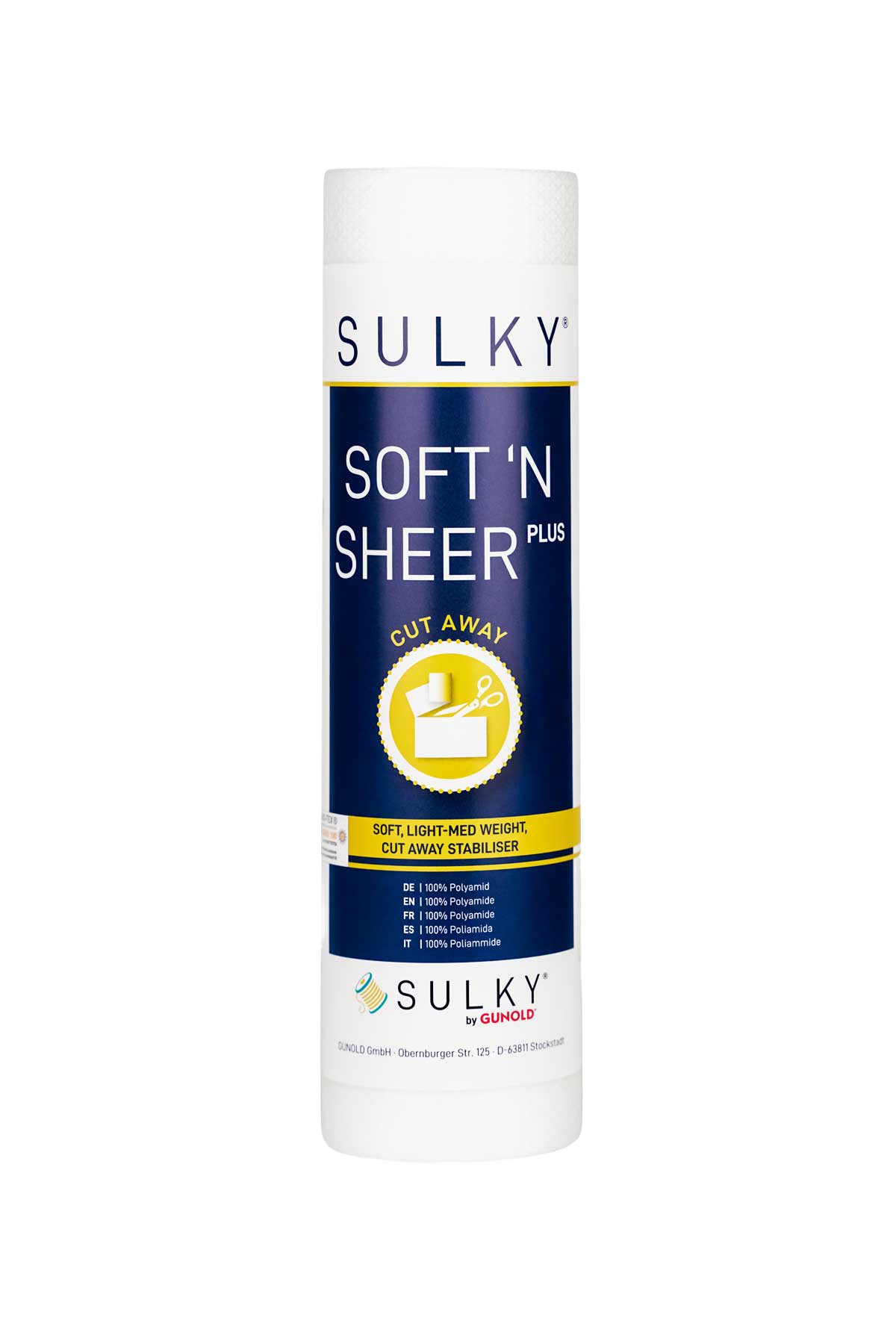
Cut-away stabilizer for jersey and stretch fabrics
Cut-away fleece remains under the design and is then trimmed back with a margin from the edge. It permanently supports jersey, sweatshirt, and knit fabrics even when worn and washed. For T-shirts, a soft cut-away fleece is often more comfortable.
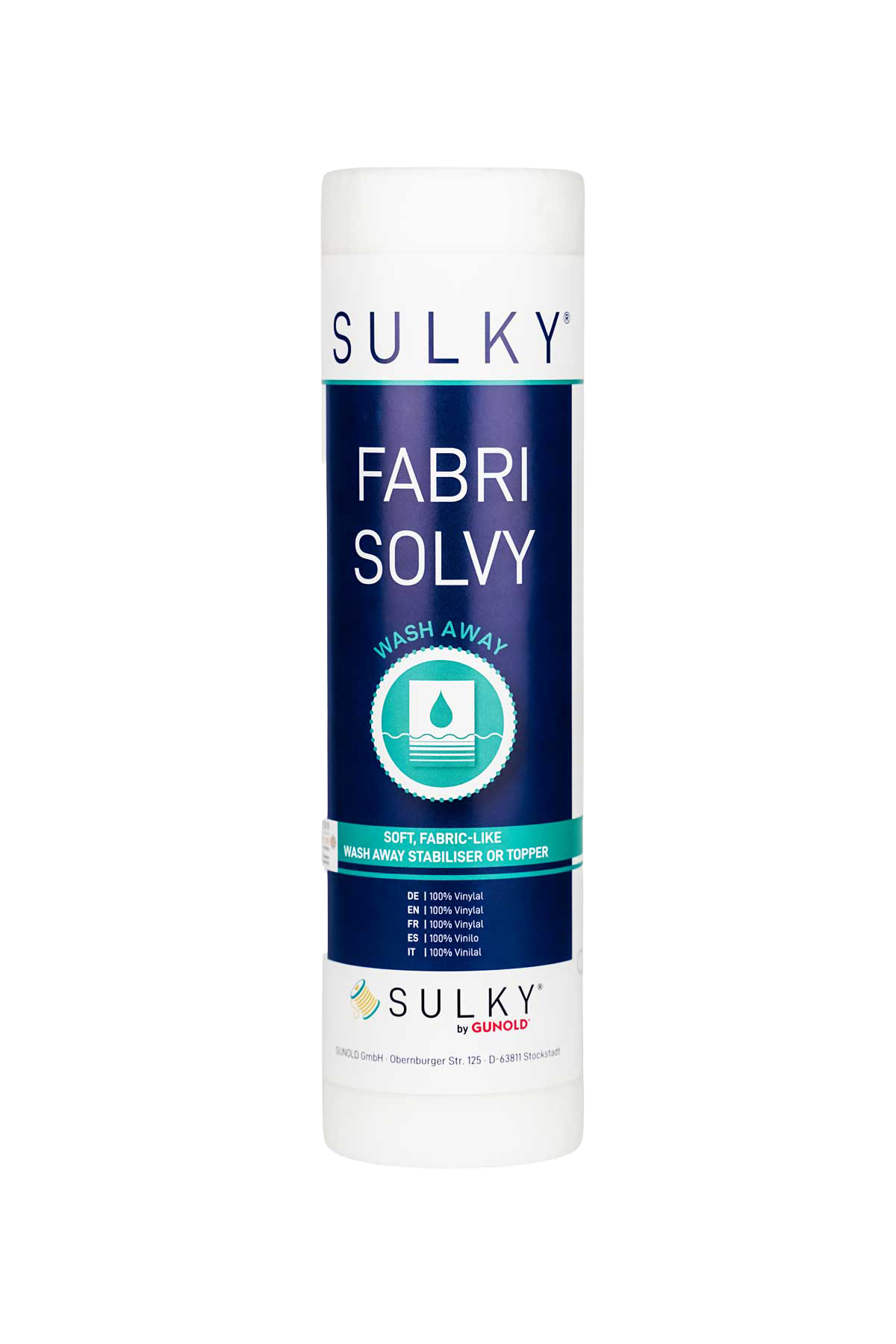
Water-soluble stabilizer and topping film
Water-soluble materials are suitable as a removable backing for freestanding lace or as a thin topping on terry cloth, fleece, and plush. Check beforehand whether the fabric and thread are water-compatible, and observe the product instructions.
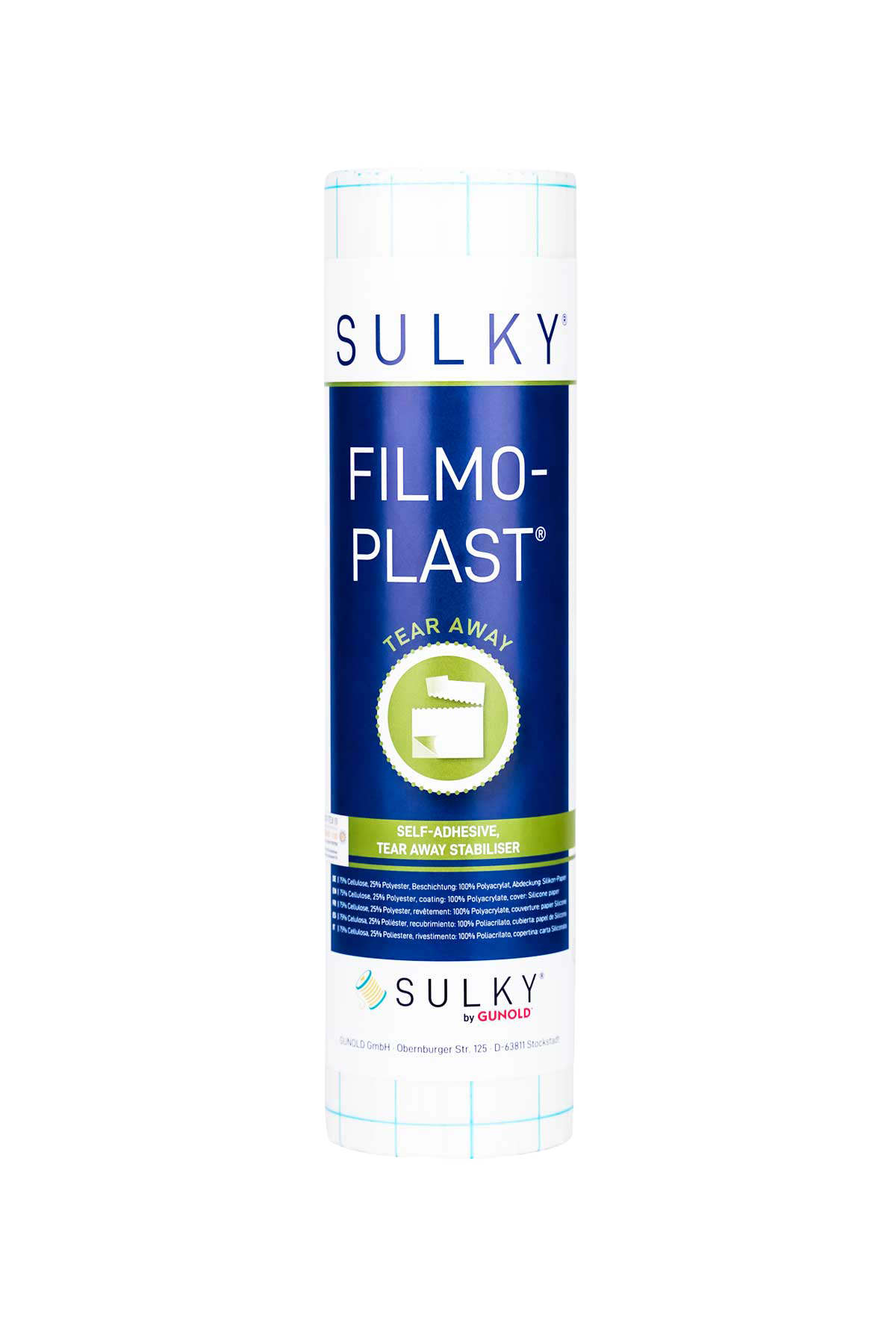
Self-adhesive embroidery stabilizer
For small parts, delicate surfaces or materials that are difficult to clamp, the non-woven fabric is hooped and the fabric is fixed wrinkle-free on the adhesive surface. Test beforehand whether the adhesive and the material are compatible.
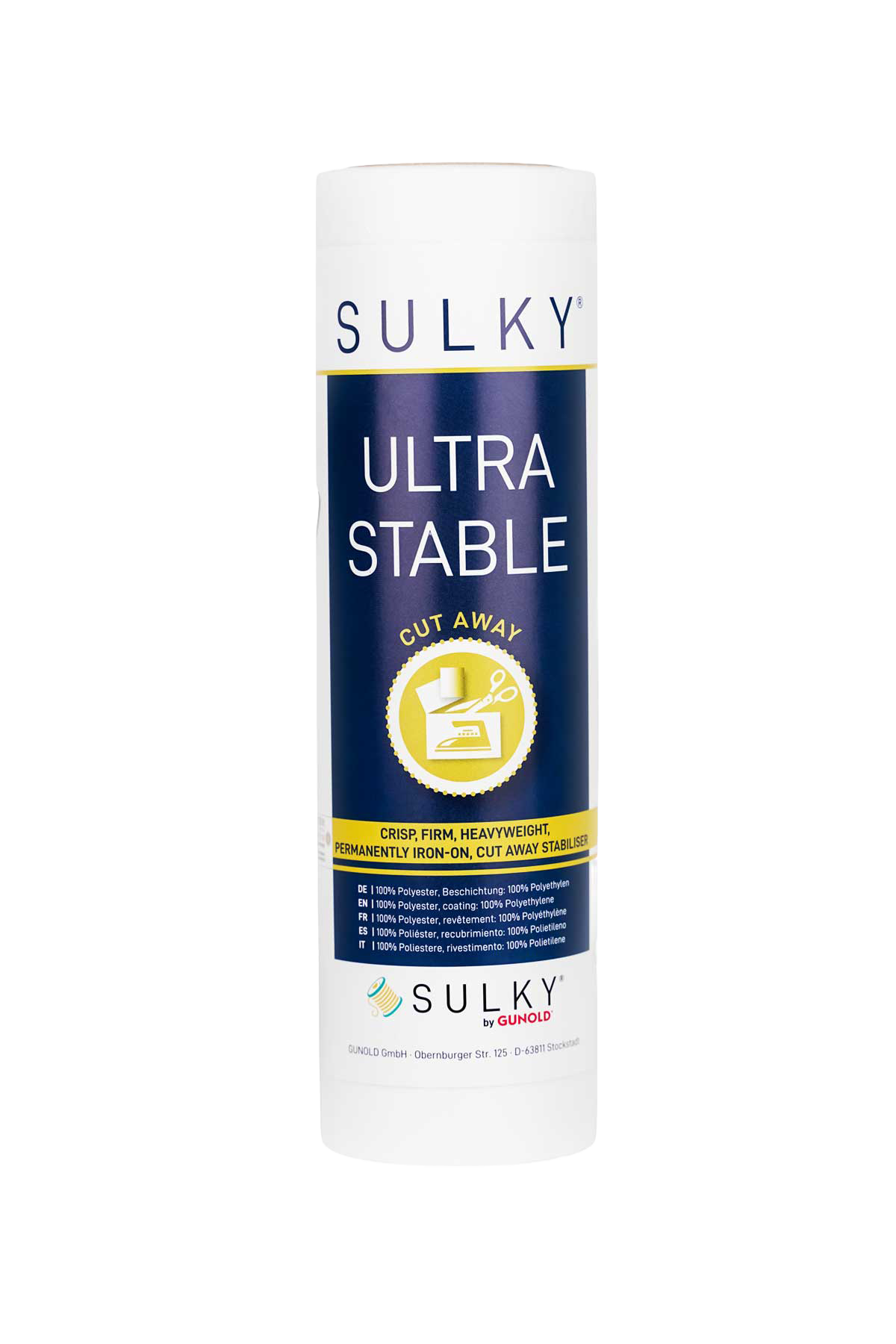
Iron-on and heat-soluble stabilizer
Iron-on interfacings can make hooping easier. Heat-soluble specialty materials help when water is unsuitable. Temperature, fabric, and thread must be suitable; the product's processing instructions are decisive.
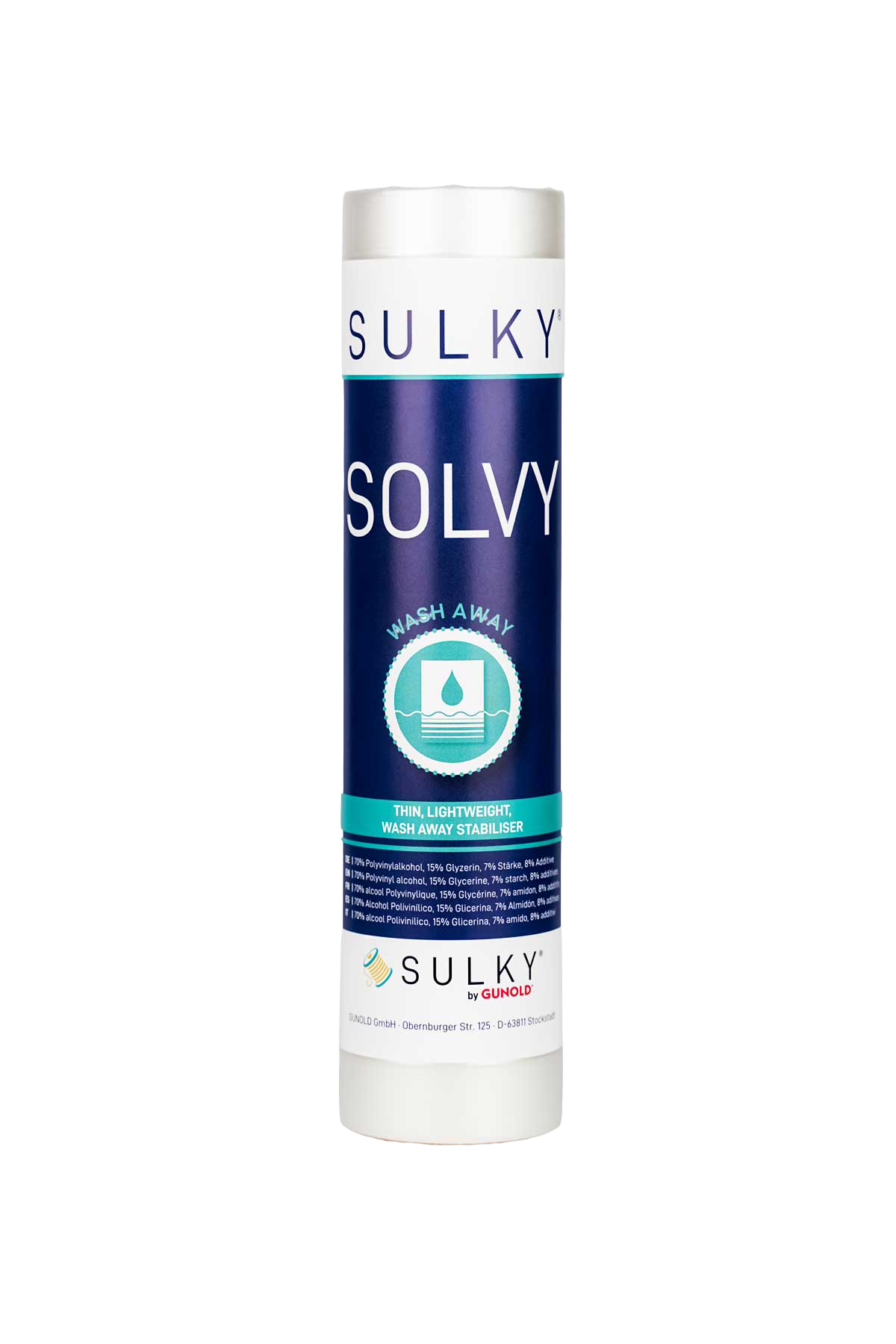
Topping for fluffy surfaces
A topping is placed on top of the fabric and does not automatically replace the stabilizer. On terry cloth, fleece, velvet, or plush, it holds down the pile so that contours and lettering remain visible.
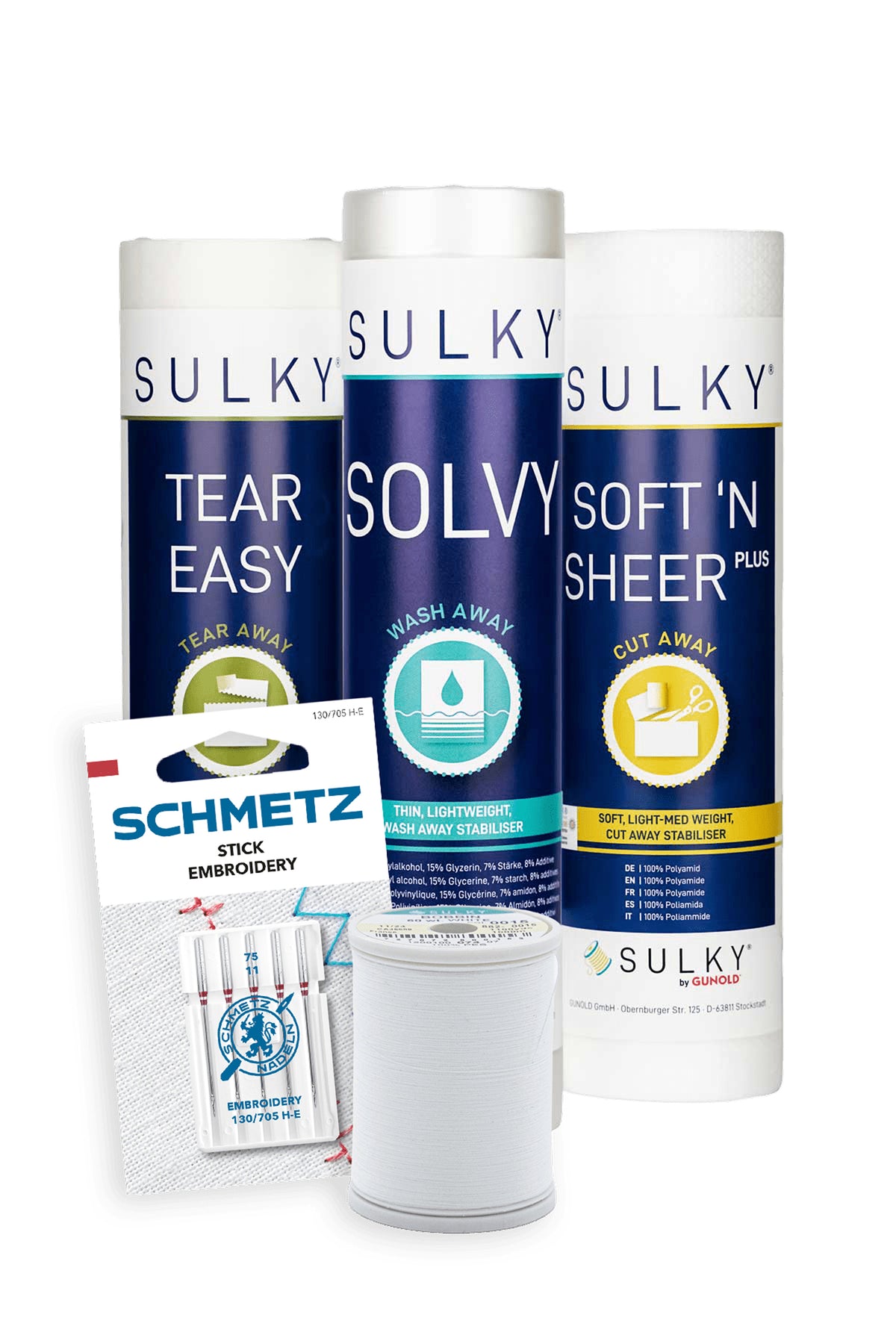

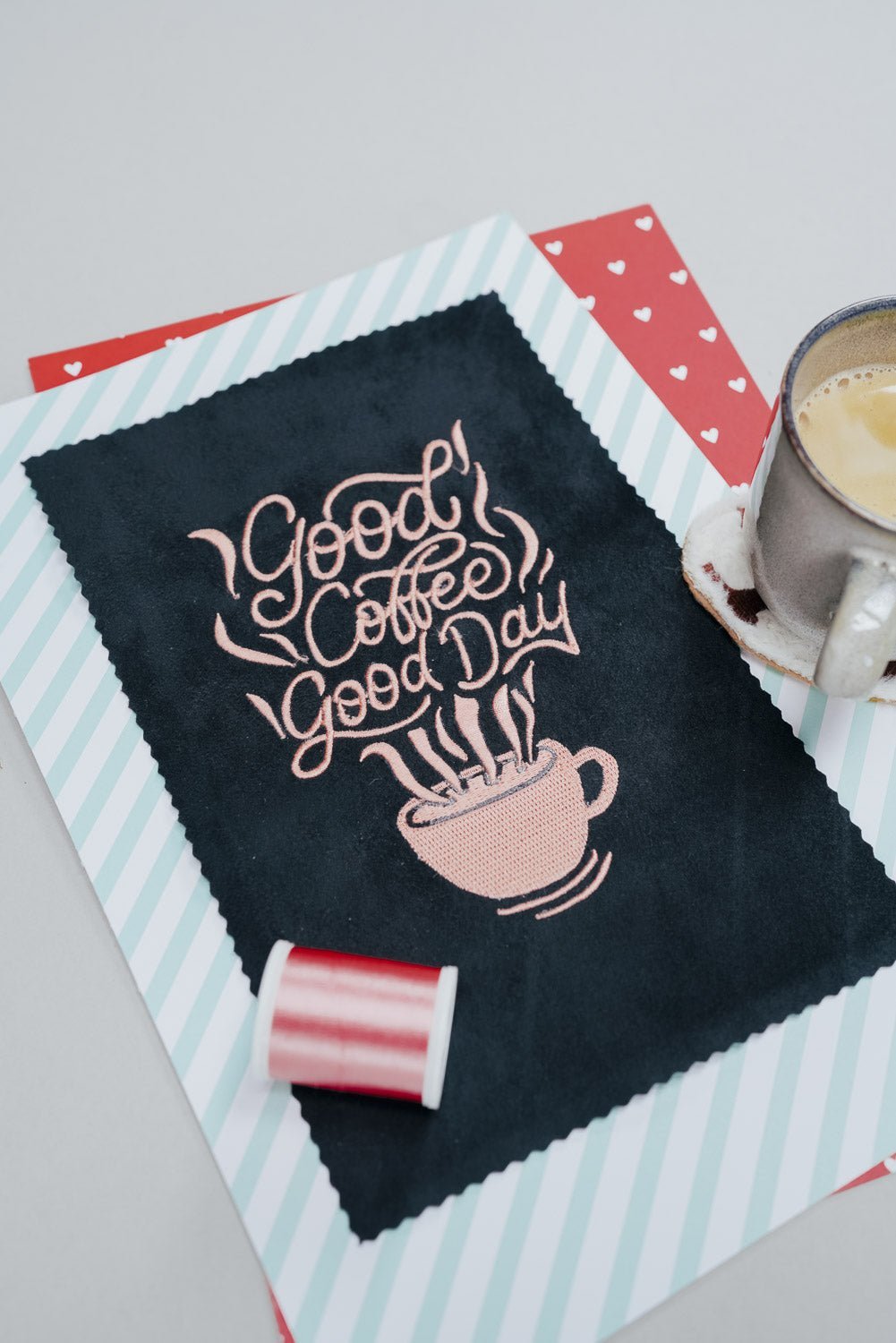
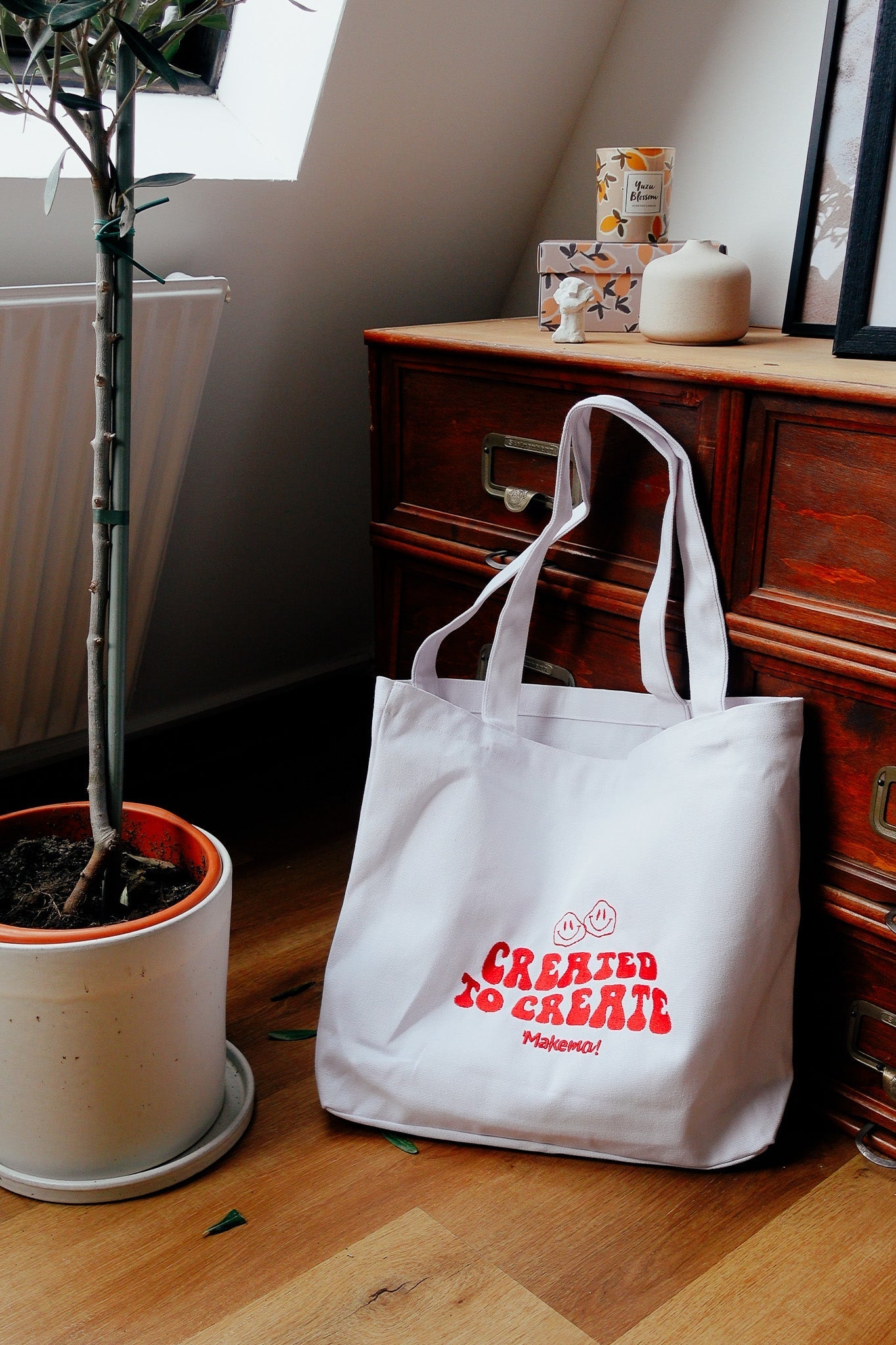
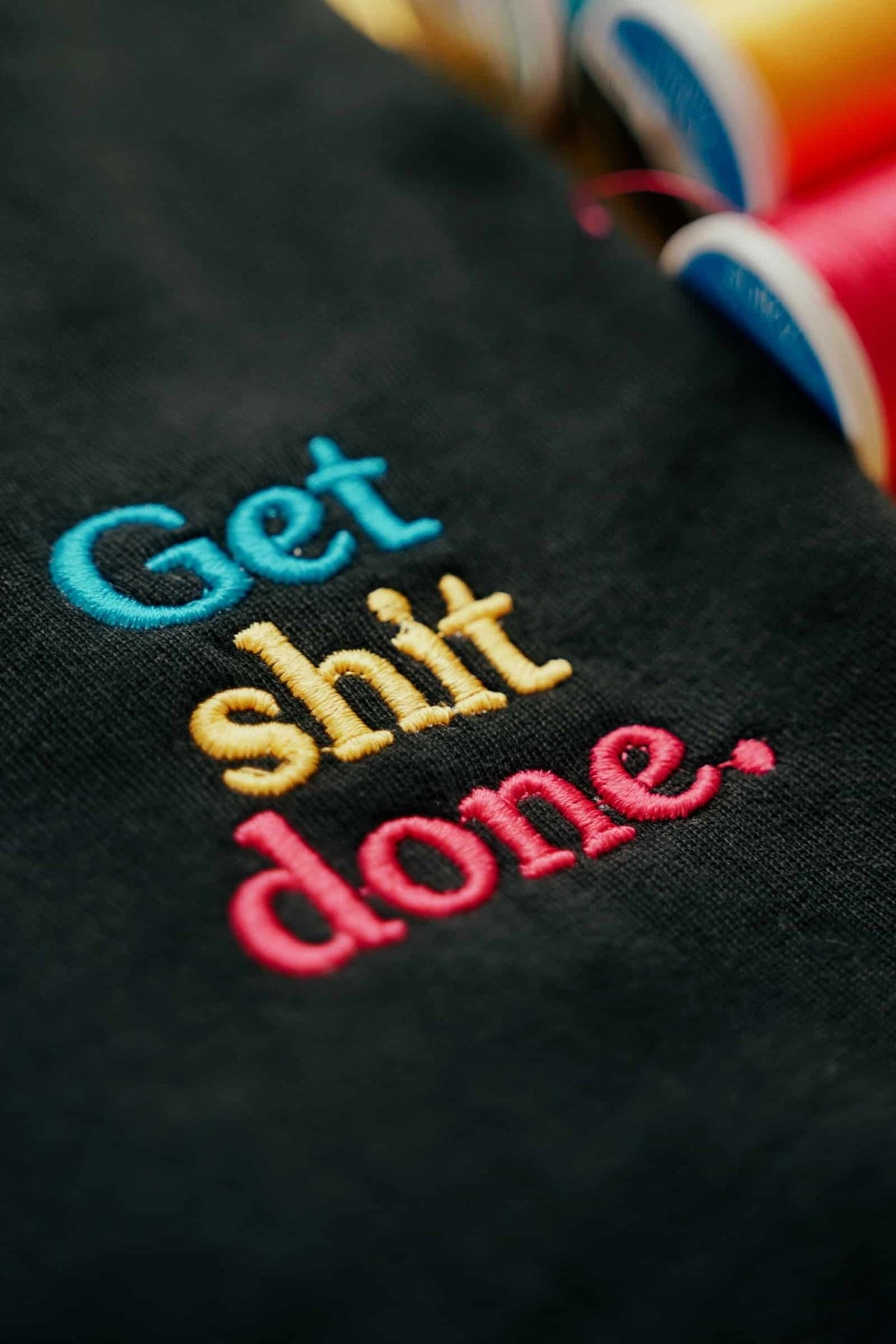
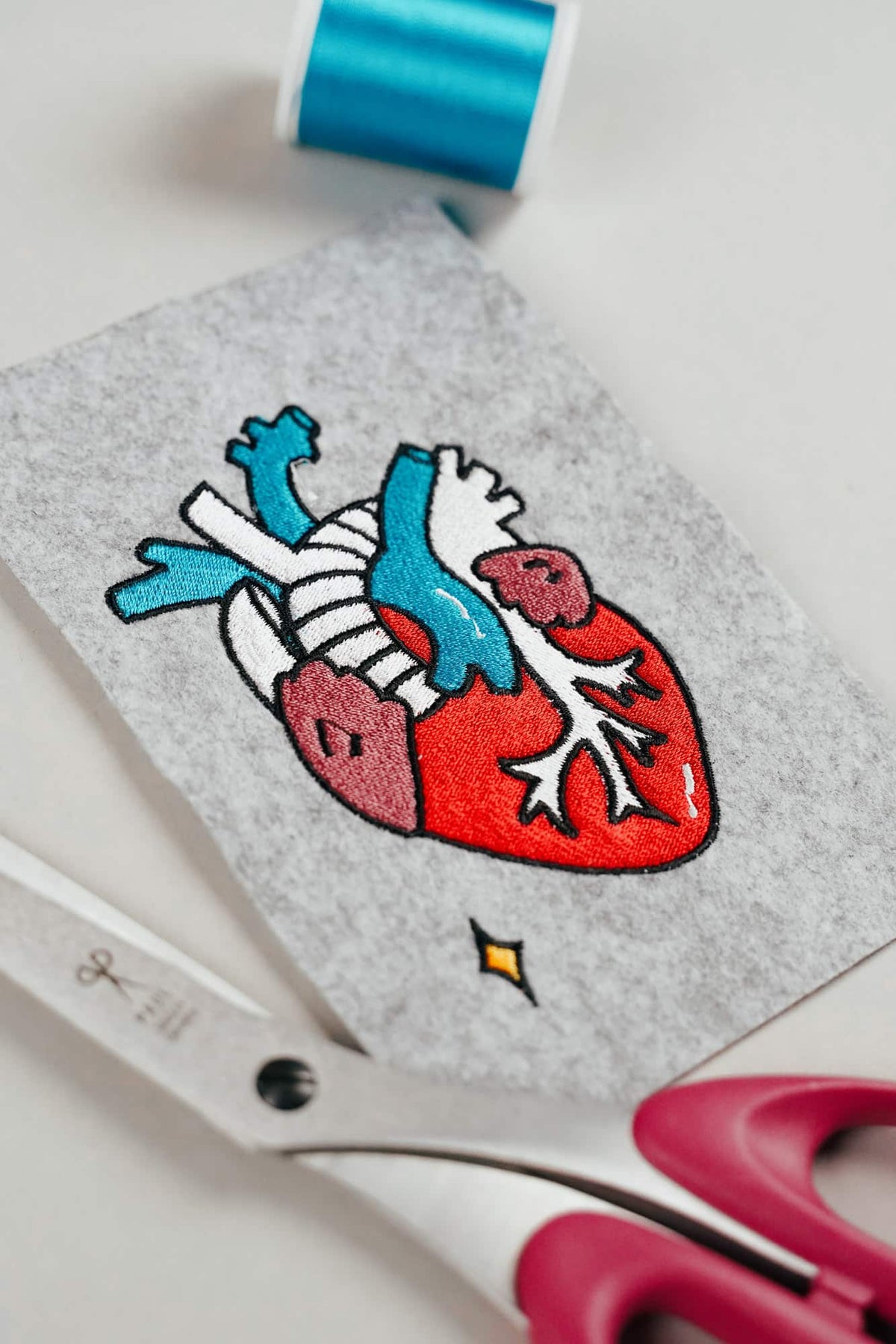
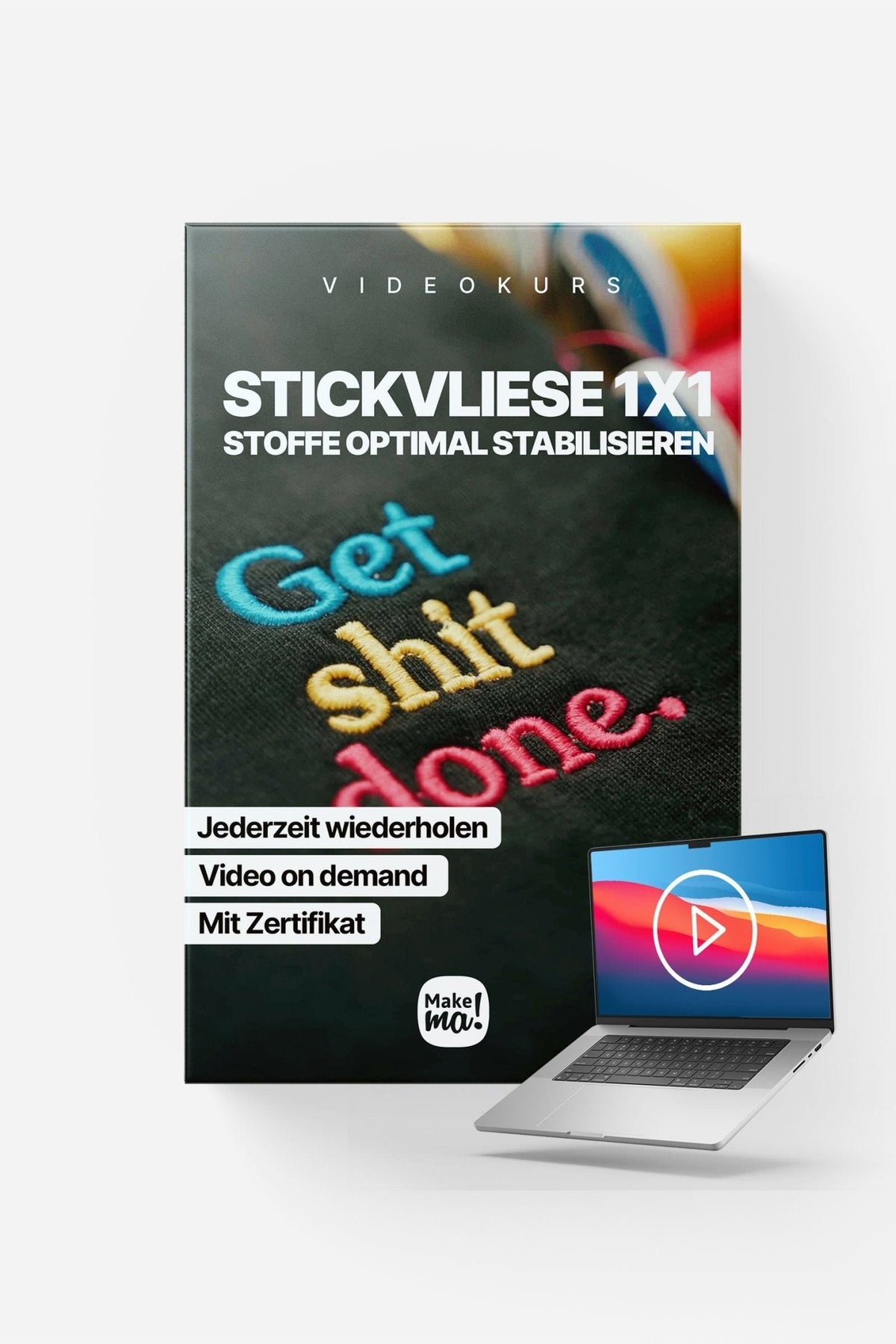

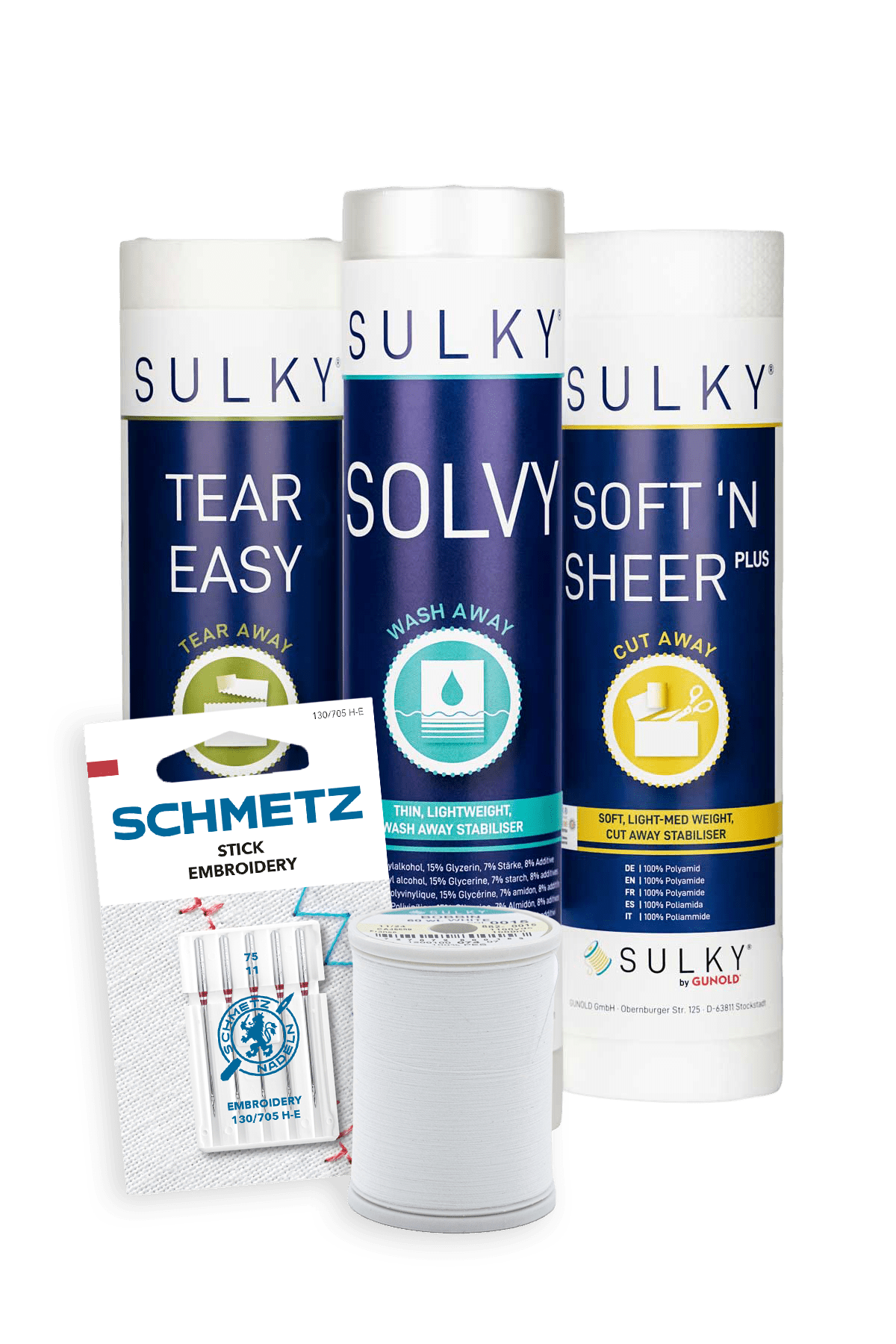
Machine Embroidery Starter Kit – 5 Essentials with Video Course
This starter bundle gives you five essential consumables for your first projects with a household embroidery machine. Three SULKY stabilisers cover woven, stretchy and high-pile fabrics. White bobbin thread and five SCHMETZ Embroidery Needles NM 75 complete the kit.
You receive:
- SULKY Tear Easy, white, 25 cm × 10 m
- SULKY Soft’n Sheer Plus, white, 25 cm × 5 m
- SULKY Solvy, 25 cm × 10 m
- SULKY bobbin thread, white, 1,000 m
- SCHMETZ Embroidery Needles NM 75, system 130/705 H-E, pack of 5
- “Stabilisers 1×1” video course as a digital extra
The video course explains how to choose, hoop, remove or wash out each stabiliser. The included 130/705 H-E needles are intended for compatible household embroidery machines; check the required needle system for other or commercial machines.
Couldn't load pickup availability
Pickup available at Ladengeschäft Hamburg
\n Usually ready in 1 hour\n\nFrequently asked questions about embroidery stabilizer
Which stabilizer is suitable for jersey and T-shirts?
For stretchy fabrics, cut-away stabilizer is usually the more reliable starting point because it remains permanently under the design. Choose a thickness appropriate for the fabric and design density and test the combination. For sensitive skin, a soft cover on the back may be useful.
Be sure to check out our set for optimal T-shirt stabilization.
When should I use tear-away instead of cut-away stabilizer?
Tear-away interfacing is often suitable for dimensionally stable, non-stretch woven fabrics. Cut-away interfacing is usually the safer choice for jersey, knits, and other stretchy fabrics. Design size, stitch density, and desired backing can alter the decision.
What do I need water-soluble stabilizer for?
It can serve as a fully removable stabilizer for freestanding lace and certain ITH projects. Thin water-soluble film is also used as a topping on terry cloth, fleece, or plush. Note product instructions and water tolerance.
Which stabilizer should I use for terry cloth and towels?
Underneath the terry fabric, you'll need a stabilizer appropriate for the design and fabric stability. Often, a water-soluble topping is also applied to the surface to prevent loops from poking through the embroidery and to ensure details remain visible.
Do I always need to hoop the fabric and stabilizer together?
No. Small, delicate, or difficult-to-hoop items can be attached to self-adhesive, already hooped stabilizer. Prepare this method wrinkle-free and without slipping.
Can I use several layers of stabilizer?
Yes, the better the stabilization, the better the embroidery result. Especially for stitch-intensive projects or flat stitch, we even recommend a combination of different stabilizers, e.g., cut-away stabilizer with tear-away stabilizer for more stability. We also recommend using 2-3 layers of thin tear-away stabilizer for thin fabrics instead of a heavy tear-away stabilizer, so that the embroidery is not pulled too hard when tearing away later.
Why does the fabric pucker despite using stabilizer?
Possible causes include unsuitable or insufficient fleece, stretched hooping, high stitch density, inappropriate underlay stitches, needle problems, or thread tension. Always assess the overall interplay of factors.
Is a particular stabilizer suitable for every embroidery machine?
The choice depends primarily on the fabric, motif, and workmanship. The hoop, embroidery area, and type of project influence handling. Also, check the instructions for your machine and the respective non-woven product.
Further resources
The embroidery stabilizer guide provides you with a technically sound starting point. However, a clean embroidery result is achieved through the interplay of design, stabilizer, needle, thread tension, and correct hooping. Always perform a test embroidery with the original fabric and final embroidery file when using a new combination.
Which machine do you use?
Find accessories that fit your machine and save your selection directly to your Machine Pass.
All accessory pages by machine
Open the accessory page for your machine model directly.
- bernette 430
- bernette b05 ACADEMY
- bernette b05 CRAFTER
- BERNETTE b35
- bernette b37
- Bernette b70 Deco
- Bernette B77
- bernette b79
- bernette Chicago 5
- bernette Chicago 7
- bernette Milan 2
- bernette Milan 3
- bernette Milan 5
- bernette Milan 7
- bernette Milan 8
- bernette Moscow 2
- bernette Moscow 3
- bernette Moscow 5
- bernette Moscow 7
- bernette Sew&Go 1
- bernette sew&go 3
- bernette sew&go 5
- bernette sew&go 7
- bernette sew&go 8
- BERNINA 1001
- BERNINA 1005
- BERNINA 1008
- BERNINA 1011
- BERNINA 1015
- BERNINA 1020
- BERNINA 1021
- BERNINA 1030
- BERNINA 1031
- BERNINA 1070
- BERNINA 1080
- BERNINA 1090
- BERNINA 1091
- BERNINA 1120
- BERNINA 1130
- BERNINA 1230
- BERNINA 1240
- BERNINA 1241
- BERNINA 125 S
- BERNINA 130
- BERNINA 135 S
- BERNINA 140
- BERNINA 145 S
- BERNINA 150
- BERNINA 153
- BERNINA 153 QE
- BERNINA 155
- BERNINA 160
- BERNINA 1630
- BERNINA 215 Simply Red
- BERNINA 230
- BERNINA 230 PE
- BERNINA activa 125
- BERNINA activa 135
- BERNINA activa 145
- BERNINA activa 210
- BERNINA activa 220
- BERNINA activa 240
- BERNINA artista 165
- BERNINA artista 170
- BERNINA artista 180
- BERNINA artista 185
- BERNINA artista 200
- BERNINA artista 630
- BERNINA artista 635
- BERNINA artista 640
- BERNINA artista 730
- BERNINA aurora 430
- BERNINA aurora 435
- BERNINA aurora 440 QE
- BERNINA aurora 450
- BERNINA B 215
- BERNINA B 325 (1. Generation)
- BERNINA B 325 (2. Generation)
- BERNINA B 330
- BERNINA B 335 (1. Generation)
- BERNINA B 335 (2. Generation)
- BERNINA B 350 PE
- BERNINA B 380
- BERNINA B 435
- BERNINA B 475 QE
- BERNINA B 480
- BERNINA B 485
- BERNINA B 495 LE Liberty Edition
- Bernina B 500
- BERNINA B 530
- BERNINA B 535
- BERNINA B 540
- BERNINA B 550
- BERNINA B 550 QE
- BERNINA B 555
- BERNINA B 560
- BERNINA B 570 QE (1. Generation)
- BERNINA B 570 QE (2. Generation)
- BERNINA B 570 QE Kaffe Edition
- BERNINA B 580
- BERNINA B 580 LE
- BERNINA B 580 QE LIBERTY
- BERNINA B 590
- BERNINA B 590 Crystal Edition
- BERNINA B 700 (1. Generation bis 2025)
- Bernina B 700 PRO
- BERNINA B 710
- BERNINA B 720
- BERNINA B 735
- BERNINA B 735 PRO
- BERNINA B 740
- BERNINA B 750
- BERNINA B 750 QE
- BERNINA B 770 PRO
- BERNINA B 770 QE
- BERNINA B 770 QE Anniversary Edition
- BERNINA B 770 QE PLUS
- BERNINA B 770 QE PLUS Kaffe Edition
- BERNINA B 770 QE PRO
- BERNINA B 770 QE SE Tula Pink
- BERNINA B 780
- BERNINA B 790
- BERNINA B 790 PLUS
- BERNINA B 790 PLUS Anniversary Edition
- BERNINA B 790 PLUS Crystal Edition
- BERNINA B 790 PLUS SE
- BERNINA B 790 PRO
- BERNINA B 790 QE PRO (Gen. 1)
- BERNINA B 790 ULTRA
- BERNINA B 820 QE
- BERNINA B 830
- BERNINA B 880
- BERNINA B 880 (Gen. 1)
- BERNINA B 880 PLUS
- BERNINA B 880 PLUS (Gen. 1)
- BERNINA B 880 PLUS Anniversary Edition
- BERNINA B 990
- BERNINA B 990 (Gen. 1)
- BERNINA L 890
- BERNINA Q 16 (Gen. 1)
- BERNINA Q 16 PLUS (Gen. 1)
- BERNINA Q 20 (Gen. 1)
- BERNINA Q 24 (Gen. 1)
- Brother 2104D
- Brother A80N
- Brother Airflow 3000
- Brother Aveneer EV1
- Brother BC800
- Brother C150VL
- Brother C50PK
- Brother CAMPUS400
- Brother Celeste Innov-is CX1
- Brother Celeste Innov-is CX1e
- Brother CS10
- Brother CS120WT
- Brother CS70
- Brother CX70PE
- Brother DS120s
- Brother DS1300
- Brother DX70SE
- Brother E50GN
- Brother Expedition Innov-is BX1
- Brother Expedition Innov-is BX1e
- Brother FS100WT
- Brother FS101
- Brother FS130QC
- Brother FS140
- Brother FS155
- Brother FS155-TUR
- Brother FS180QC
- Brother FS20
- Brother FS200CE
- Brother FS210
- Brother FS250FE
- Brother FS250ME
- Brother FS40
- Brother FS40WT
- Brother FS50
- Brother FS60s
- Brother FS70
- Brother FS70WTs
- Brother Innov-is 10A (Testsieger)
- Brother Innov-is 5000
- Brother Innov-is 950
- Brother Innov-is 955
- Brother Innov-is A150
- Brother Innov-is A16
- Brother Innov-is A50
- Brother Innov-is A60SE
- Brother Innov-is A65
- Brother Innov-is A80
- Brother Innov-is F400
- Brother Innov-is F410
- Brother Innov-is F420
- Brother Innov-is F440E
- Brother Innov-is F460
- Brother Innov-is F480
- Brother Innov-is F540E
- Brother Innov-is F560
- Brother Innov-is F580
- Brother Innov-is I
- Brother Innov-is Ie
- Brother Innov-is M240ED
- Brother Innov-is M270
- Brother Innov-is M280D
- Brother Innov-is M340ED
- Brother Innov-is M380
- Brother Innov-is M380D
- Brother Innov-is MV
- Brother Innov-is NQ3700D
- Brother Innov-is NS1850L
- Brother Innov-is NS20
- Brother Innov-is NS25
- Brother Innov-is NS40
- Brother Innov-is NS80E
- Brother Innov-is NS80PRW
- Brother Innov-is NS80TL
- Brother Innov-is NV1040
- Brother Innov-is NV1040SE
- Brother Innov-is NV1045SE
- Brother Innov-is NV10A
- Brother Innov-is NV1100
- Brother Innov-is NV1150
- Brother Innov-is NV1300
- Brother Innov-is NV1350
- Brother Innov-is NV1500
- Brother Innov-is NV1500D
- Brother Innov-is NV180
- Brother Innov-is NV1800Q
- Brother Innov-is NV180D
- Brother Innov-is NV1850Q
- Brother Innov-is NV20
- Brother Innov-is NV20LE
- Brother Innov-is NV25
- Brother Innov-is NV2600
- Brother Innov-is NV2650D
- Brother Innov-is NV2700
- Brother Innov-is NV2750D
- Brother Innov-is NV4000
- Brother Innov-is NV4000D
- Brother Innov-is NV555
- Brother Innov-is NV800E
- Brother Innov-is NV850E
- Brother Innov-is NV870SE
- Brother Innov-is NV880E
- Brother Innov-is NV970L
- Brother Innov-is Stellaire XE2
- Brother Innov-is Stellaire XJ2
- Brother Innov-is V3 (LE)
- Brother Innov-is V5
- Brother Innov-is V5 (LE)
- Brother Innov-is V7
- Brother Innov-is VQ2
- Brother Innov-is VQ4
- Brother Innov-is XJ1
- Brother Innov-is XV
- Brother Inventio NV1045
- Brother Inventio NV1150
- Brother Inventio NV1350
- Brother Inventio NV1850Q
- Brother JK4000
- Brother JS100
- Brother KD144S Little Angel
- Brother KD40
- Brother KE20
- Brother Luminaire Innov-is XP1
- Brother Luminaire Innov-is XP2
- Brother Luminaire Innov-is XP3
- Brother M370
- Brother M370M
- Brother M380DM
- Brother ModerN210e
- Brother ModerN40E
- Brother ModerN50E
- Brother ModerN60E
- Brother NV50S
- Brother PR1055X
- Brother PR1060W
- Brother PR1X
- Brother PR680W
- Brother SL500
- Brother Style100Q
- Brother Style40e
- Brother Style60e
- Brother Style80e
- Brother TY600C
- Brother XN1700
- Brother XN2500
- Brother XQ3700
- Happy Japan HCD3E-1501
- Happy Japan HCH-701P
- Happy Japan HCS3-1201
- Husqvarna VIKING #1+
- Husqvarna VIKING 100
- Husqvarna VIKING 105
- Husqvarna VIKING 1050
- Husqvarna VIKING 1070
- Husqvarna VIKING 1070 S
- Husqvarna VIKING 1090
- Husqvarna VIKING 1100
- Husqvarna VIKING 120
- Husqvarna VIKING 1200
- Husqvarna VIKING 1250
- Husqvarna VIKING 150
- Husqvarna VIKING 180
- Husqvarna VIKING 185
- Husqvarna VIKING 190
- Husqvarna VIKING 205
- Husqvarna VIKING 210
- Husqvarna VIKING 215
- Husqvarna VIKING 225
- Husqvarna VIKING 230
- Husqvarna VIKING 250
- Husqvarna VIKING 350
- Husqvarna VIKING 400
- Husqvarna VIKING 500
- Husqvarna VIKING 610
- Husqvarna VIKING 620
- Husqvarna VIKING 630
- Husqvarna VIKING 90
- Husqvarna VIKING 940
- Husqvarna VIKING 945
- Husqvarna VIKING 95
- Husqvarna VIKING 950
- Husqvarna VIKING 950 S
- Husqvarna VIKING 960
- Husqvarna VIKING 980
- Husqvarna VIKING 990
- Husqvarna VIKING 990 S
- Husqvarna VIKING Brilliance 75Q
- Husqvarna VIKING Daisy 310
- Husqvarna VIKING Daisy 315
- Husqvarna VIKING Daisy 320
- Husqvarna VIKING Daisy 325
- Husqvarna VIKING Daisy 330
- Husqvarna VIKING Daisy 335
- Husqvarna VIKING Designer Brilliance 80
- Husqvarna VIKING Designer Diamond
- Husqvarna VIKING Designer Diamond deLuxe
- Husqvarna VIKING Designer Diamond Royale
- Husqvarna VIKING Designer Epic
- Husqvarna VIKING Designer EPIC 2
- Husqvarna VIKING Designer Epic 3
- Husqvarna VIKING Designer I
- Husqvarna VIKING Designer II
- Husqvarna VIKING Designer Jade 20
- Husqvarna VIKING Designer Jade 35
- Husqvarna VIKING Designer Quartz 29
- Husqvarna VIKING Designer Ruby
- Husqvarna VIKING Designer Ruby 90
- Husqvarna VIKING Designer Ruby deLuxe
- Husqvarna VIKING Designer Ruby Royale
- Husqvarna VIKING Designer Sapphire 85
- Husqvarna VIKING Designer SE
- Husqvarna VIKING Designer SE Limited Edition
- Husqvarna VIKING Designer Topaz 20
- Husqvarna VIKING Designer Topaz 25
- Husqvarna VIKING Designer Topaz 30
- Husqvarna VIKING Designer Topaz 40
- Husqvarna VIKING Designer Topaz 50
- Husqvarna VIKING Designer Topaz 65
- Husqvarna VIKING Eden Rose 250C
- Husqvarna VIKING Eden Rose 250M
- Husqvarna VIKING Emerald 116
- Husqvarna VIKING Emerald 118
- Husqvarna VIKING Emerald 122
- Husqvarna VIKING Emerald 183
- Husqvarna VIKING Emerald 203
- Husqvarna VIKING Epic 980Q
- Husqvarna VIKING Epic Quilt 97
- Husqvarna VIKING Freesia 415
- Husqvarna VIKING Freesia 425
- Husqvarna VIKING Interlude 435
- Husqvarna VIKING Interlude 445
- Husqvarna VIKING Iris
- Husqvarna VIKING Lily 530
- Husqvarna VIKING Lily 535
- Husqvarna VIKING Lily 540
- Husqvarna VIKING Lily 545
- Husqvarna VIKING Lily 550
- Husqvarna VIKING Lily 555
- Husqvarna VIKING Onyx 15
- Husqvarna VIKING Onyx 25
- Husqvarna VIKING Onyx 30
- Husqvarna VIKING Opal 650
- Husqvarna VIKING Opal 670
- Husqvarna VIKING Opal 690Q
- Husqvarna VIKING ORCHIDEA
- Husqvarna VIKING Platinum 950 E
- Husqvarna VIKING Platinum 955 E
- Husqvarna VIKING Platinum Plus 715
- Husqvarna VIKING Platinum Plus 730
- Husqvarna VIKING Platinum Plus 735
- Husqvarna VIKING Platinum Plus 750 Quilt
- Husqvarna VIKING Platinum Plus 755 Quilt
- Husqvarna VIKING Platinum Plus 770
- Husqvarna VIKING Platinum Plus 775
- Husqvarna VIKING Prelude 340
- Husqvarna VIKING Prelude 360
- Husqvarna VIKING Quilt Designer
- Husqvarna VIKING Quilt Designer II
- Husqvarna VIKING Rose 600
- Husqvarna VIKING Rose 605
- Husqvarna VIKING Sapphire 830
- Husqvarna VIKING Sapphire 835
- Husqvarna VIKING Sapphire 850
- Husqvarna VIKING Sapphire 855
- Husqvarna VIKING Sapphire 870Q
- Husqvarna VIKING Sapphire 875Q
- Husqvarna VIKING Sapphire 930
- Husqvarna VIKING Sapphire 960Q
- Husqvarna VIKING Sapphire 965Q
- Husqvarna VIKING Scandinavia 100
- Husqvarna VIKING Scandinavia 200
- Husqvarna VIKING Scandinavia 300
- Husqvarna VIKING Scandinavia 400
- Husqvarna VIKING Topaz 55
- Husqvarna VIKING Topaz 55Q
- Husqvarna VIKING Tribute 140C
- Husqvarna VIKING Tribute 140M
- Husqvarna VIKING Tribute 145C
- Husqvarna VIKING Tribute 145M
- Husqvarna VIKING Tribute 150C
- Janome MemoryCraft 350E
- Janome MemoryCraft 550E
- Janome MemoryCraft 6600P
- Janome Skyline S9
- PFAFF 1000
- PFAFF 1006
- PFAFF 1010
- PFAFF admire 1000
- PFAFF admire air 5000
- PFAFF admire air 7000
- PFAFF ambition 1.0
- PFAFF ambition 1.5
- PFAFF ambition 610
- PFAFF ambition 620
- PFAFF ambition essential
- PFAFF classicstyle 2023
- PFAFF classicstyle 2025
- PFAFF classicstyle 2027
- PFAFF classicstyle 2029
- PFAFF creative 1.5
- PFAFF creative 2.0
- PFAFF creative 2124
- PFAFF creative 2134
- PFAFF creative 2140
- PFAFF creative 2144
- PFAFF creative 2170
- PFAFF creative 3.0
- PFAFF creative 4.0
- PFAFF creative 4.5
- PFAFF creative 7530
- PFAFF creative 7550
- PFAFF creative 7560
- PFAFF creative 7562
- PFAFF creative 7570
- PFAFF creative ambition 640
- PFAFF creative elevate 680
- PFAFF creative expect 350
- PFAFF creative expression 750
- PFAFF creative icon
- PFAFF creative icon 2
- PFAFF creative icon 3
- PFAFF creative performance
- PFAFF creative performance 950
- PFAFF creative sensation
- PFAFF creative sensation pro
- PFAFF creative sensation pro II
- PFAFF creative vision
- PFAFF expression 150
- PFAFF expression 2.0
- PFAFF expression 2014
- PFAFF expression 2024
- PFAFF expression 2026
- PFAFF expression 2028
- PFAFF expression 2034
- PFAFF expression 2036
- PFAFF expression 2038
- PFAFF expression 3.0
- PFAFF expression 3.2
- PFAFF expression 3.5
- PFAFF expression 710
- PFAFF expression 715
- PFAFF freestyle 1522
- PFAFF freestyle 1527
- PFAFF hobby 301
- PFAFF hobby 303
- PFAFF hobby 307
- PFAFF hobby 309
- PFAFF hobby 4240
- PFAFF hobby 4250
- PFAFF hobby 4260
- PFAFF passport 2.0
- PFAFF passport 3.0
- PFAFF performance 2054
- PFAFF performance 2056
- PFAFF performance 2058
- PFAFF performance 5.0
- PFAFF performance 5.2
- PFAFF performance icon
- PFAFF quilt ambition 2.0
- PFAFF quilt ambition 630
- PFAFF quilt ambition 635
- PFAFF quilt expression 2042
- PFAFF quilt expression 2044
- PFAFF quilt expression 2046
- PFAFF quilt expression 2048
- PFAFF quilt expression 4.0
- PFAFF quilt expression 4.2
- PFAFF quilt expression 720
- PFAFF quilt expression 725
- PFAFF select 1520
- PFAFF select 1526
- PFAFF select 1528
- PFAFF select 1530
- PFAFF select 1536
- PFAFF select 1538
- PFAFF select 1540
- PFAFF select 1546
- PFAFF select 1548
- PFAFF select 2.0
- PFAFF select 2.2
- PFAFF select 3.0
- PFAFF select 3.2
- PFAFF select 4.0
- PFAFF select 4.2
- PFAFF stretch & jeans 6091
- PFAFF tiptronic 2010
- PFAFF tiptronic 2020
- PFAFF tiptronic 2030
- PFAFF tiptronic 2040
- PFAFF tiptronic 6110
- PFAFF tiptronic 6112
- PFAFF tiptronic 6120
- PFAFF tiptronic 6122
- PFAFF tiptronic 6150
- PFAFF tiptronic 6152
- PFAFF tiptronic 6230
- PFAFF tiptronic 6232
- PFAFF tiptronic 6250
- PFAFF tiptronic 6270
- SINGER SE9185
- SINGER Simple 3223
- SINGER Simple 3229
- SINGER® MOMENTO™ Plotter
- Veritas Florence
- Veritas Power Stitch PRO